Do I Need A Permit for Large Flower Arrangements in Hornchurch
Posted on 11/10/2026
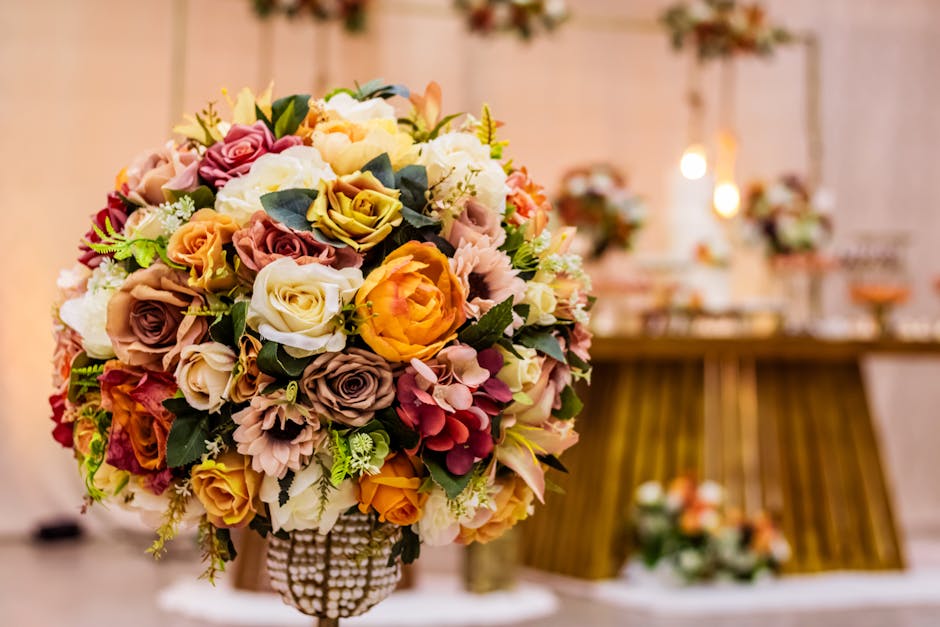
If you are planning a big floral display and asking, Do I Need A Permit for Large Flower Arrangements in Hornchurch, you are already thinking the right way. Most people focus on colour, shape, and the wow factor, then the practical side sneaks up at the last minute. Can the arrangement go in a shopfront? Is it for a wedding venue, a church, a memorial, or a public-facing event? That is where the permit question starts to matter.
Truth be told, there is no one-size-fits-all answer. In some cases you may need permission from a venue, landlord, council, or event organiser. In others, nothing more than a sensible check is needed. This guide walks through the real-world factors, the likely decision points, and the safest way to handle large floral displays in Hornchurch without headaches later on.
We will keep it plain English. No fluff. Just the stuff that helps you decide what to do next, whether you are arranging flowers for a wedding, a tribute, a business display, or a one-off special occasion.
Table of Contents
- Why permit questions matter for large arrangements
- How permissions and approvals usually work
- Key benefits of checking first
- Who needs this kind of planning
- Step-by-step guidance
- Expert tips for better results
- Common mistakes to avoid
- Tools, resources and recommendations
- Law, compliance and best practice
- Options and comparison
- Real-world example
- Practical checklist
- Conclusion
- Frequently asked questions
Why Do I Need A Permit for Large Flower Arrangements in Hornchurch Matters
Large flower arrangements are not just decorative. Once they get big enough, they can affect space, access, safety, sightlines, flooring, and even how a venue is used. A dramatic entrance piece can look stunning in the morning and become a trip hazard by late afternoon if it is tucked too close to a doorway. A tall pedestal arrangement might be perfect in a chapel but awkward in a narrow shopfront. That is why people ask about permits in the first place.
In Hornchurch, as in other parts of London, the answer often depends on where the arrangement will sit and who controls the space. A private home garden is very different from a retail frontage, public event space, cemetery area, or rented hall. One small misunderstanding can lead to a request to move everything at the last minute. Not ideal, especially when the flowers have just been delivered and the room smells like fresh roses and florist tape. Nobody wants that scramble.
There is also the reputational side. If you are planning flowers for a business, wedding, or public ceremony, being seen as organised matters. Even if no formal permit is needed, checking first shows respect for the venue and for the people using the space. That can make a surprising difference.
Expert summary: The permit question is usually less about the flowers themselves and more about the location, scale, duration, and impact of the display. If the arrangement changes how a space is used, it is worth checking before setting it up.
How Do I Need A Permit for Large Flower Arrangements in Hornchurch Works
Let's keep this practical. A permit or permission for large flower arrangements may come from a few different places, depending on the setup:
- Venue permission if the display is inside a church, hotel, hall, restaurant, or event space.
- Landlord or managing agent approval if the flowers affect shared areas, entrances, or lease conditions.
- Council or local authority consent if the arrangement is in a public area or could affect pavements, traffic flow, or public access.
- Event organiser approval if the flowers are part of a market, parade, wedding fair, festival, or corporate event.
- Cemetery or memorial space rules if the arrangement is for a grave, chapel, or remembrance area.
Sometimes people use the word "permit" loosely when they actually mean "approval" or "permission". That distinction matters. A venue may not issue a formal permit, but they may still require written approval or an advance booking note. In real life, that is often enough.
The process usually looks like this:
- You describe the arrangement size, height, placement, and duration.
- The venue or authority checks whether it affects access, fire exits, visibility, or public movement.
- They confirm whether written approval is enough or whether a formal application is needed.
- You adjust the design if needed, for example by reducing height or choosing a safer base.
- You install the flowers with any conditions in mind, such as time limits or removal requirements.
If the arrangement is purely decorative inside a private setting, the process may be very simple. If it is large, structural, or in a shared or public environment, the process becomes more careful. And fair enough too. Big displays can be beautiful, but they should not block a fire exit or leave petals everywhere on a wet floor at 8:30 on a Monday morning.
Key Benefits and Practical Advantages
Checking permissions before installing large flowers is not just about avoiding trouble. It also makes the whole project smoother. Here are the main advantages.
- You avoid last-minute changes. Big arrangements are harder to move once they are built and hydrated.
- You protect the design. If you know the space rules early, you can create flowers that fit properly instead of forcing them in.
- You reduce risk. Fewer trip hazards, fewer blocked exits, fewer awkward apologies.
- You look professional. Whether you are arranging for a client, a venue, or a family event, good planning builds trust.
- You save time and money. Reworking an oversized design at short notice is rarely cheap.
There is also a calmer side to it. When you know the permissions are sorted, you can concentrate on the creative part. Choice of blooms, colour palette, scale, foam or water source, transport, installation. That is the fun bit, really. The admin is the admin, but it pays for itself in peace of mind.
Practical benefit in one line: the earlier you clarify the rules, the more freedom you usually have with the final design.
Who This Is For and When It Makes Sense
This topic matters for quite a few people, not just event planners. Large flower arrangements come up in all sorts of situations, and the permit question is easy to overlook when you are busy with everything else.
- Wedding couples planning entrance pieces, arches, registries, table installations, or statement displays.
- Florists and designers delivering large work to venues, churches, or businesses.
- Families arranging memorial flowers, tribute pieces, or remembrance displays.
- Businesses using flowers for launches, receptions, corporate events, or seasonal decor.
- Event organisers coordinating decor in public or semi-public spaces.
- Venue teams who need to know what can safely stay in place and for how long.
It makes the most sense to ask about permission when the arrangement is any of the following:
- larger than a standard vase or table arrangement
- placed near entrances, walkways, or shared access points
- attached to walls, fixtures, furniture, or temporary structures
- set up for more than a few hours
- part of a public-facing display or event
- built with foam, stands, candles, signage, or other extras
If the flowers are simple, small, and inside your own home, you probably do not need to worry. But once the display crosses into venue-managed space or public space, the question becomes much more real.
Step-by-Step Guidance
If you are unsure whether a permit is needed, use this process. It is simple, but it works.
1. Identify the exact location
Start by being precise. Is the arrangement going inside a private venue, on a reception desk, in a church aisle, outside a shop, or near a communal entrance? The location often decides everything.
2. Measure the arrangement properly
Do not guess. Write down approximate height, width, depth, and whether the display includes a stand, plinth, frame, or arch. A "medium-large" arrangement means very different things to different people. That phrase can hide trouble.
3. Ask who controls the space
Is it the venue owner, a landlord, a facilities team, or a local authority? You need the right person, not just the first polite person who answers the phone.
4. Explain what the flowers will affect
Be ready to say whether the display blocks a route, touches a wall, needs water, needs fixing points, or will stay overnight. These details help the other side give a meaningful answer.
5. Get approval in writing if possible
Even a short email can save a lot of confusion later. Written confirmation is useful if different people are involved in setup and removal. One "I thought someone else had checked" moment is enough to teach the lesson.
6. Build the arrangement to fit the conditions
If there are restrictions, design around them. Use a lower base, lighter materials, removable pieces, or a narrower footprint. Often the finished result looks better because it is more considered.
7. Plan the install and takedown
Decide who brings it in, when it goes up, and who removes it. If flowers are on a schedule, especially for a wedding or service, timing matters more than people expect. The room can look perfect at noon and then very different by 5pm once traffic, heat, and people have done their bit.
Expert Tips for Better Results
After plenty of real-world setups, a few patterns appear again and again. Small choices make a big difference.
- Keep the footprint sensible. A tall display is one thing. A tall display that spreads too widely is another.
- Think about visibility. Large arrangements should not hide signs, staff desks, ceremony focal points, or safety notices.
- Use stable bases. Heavy flowers need solid support, especially in busy areas.
- Consider scent carefully. Strongly scented blooms can be lovely, but in enclosed venues they can be overpowering.
- Choose materials that suit the venue. Some spaces prefer dry mechanics, some allow water, some do not want anything that might leak.
- Match the arrangement to the event tone. A memorial wreath, wedding centrepiece, and corporate entrance piece all have different expectations.
One small but useful tip: if the venue is in doubt, offer a scaled-down mock-up photo before the event. It can settle nerves quickly. And yes, it saves you from hearing "could we just make it a bit smaller?" after everything has been prepared. Which, let's face it, is never anyone's favourite sentence.
Also, don't underestimate the power of asking early. A five-minute check can save an hour of rearranging on the day.
Common Mistakes to Avoid
These are the mistakes that tend to cause the most trouble, and they are often completely avoidable.
- Assuming all flower work is automatically allowed. It is not, especially in managed or public spaces.
- Confusing venue permission with council permission. They are not always the same thing.
- Ignoring the arrangement's scale. A piece that looks elegant in a showroom may overwhelm a small venue corridor.
- Forgetting access routes. Fire exits, staff paths, wheelchair access, and service doors matter.
- Leaving installation too late. A rushed setup increases mistakes and makes it harder to fix issues.
- Not checking removal timing. Some spaces need everything cleared the same day.
- Using weak or unstable structures. Large arrangements should not wobble when people walk past.
To be fair, most problems happen because people are focusing on the beautiful bit and not the logistics. That is understandable. Flowers are supposed to feel effortless. They are not actually effortless, though. Not the big ones, anyway.
Tools, Resources and Recommendations
You do not need a huge kit, but the right basics help a lot. Whether you are a florist, a planner, or simply organising one large display, a few tools make life easier.
- Measuring tape for checking height, width, and stand size.
- Simple sketch or floor plan to show where the arrangement will sit.
- Photos of the venue so you can judge scale before delivery.
- Delivery checklist for timing, access, and contact details.
- Sturdy transport boxes or trays to reduce damage in transit.
- Water source and conditioning supplies for arrangements that need hydration.
- Fixing materials approved by the venue where relevant, rather than improvising on the spot.
If you are choosing flowers for a large display, think in terms of structure as much as colour. Some blooms hold shape better than others, and some read more clearly from a distance. Roses, lilies, hydrangeas, chrysanthemums, carnations, and mixed seasonal stems each create different visual effects. If you want to explore styles or supporting flower options, it can help to look through a florist's curated collections such as luxury flower selections or browse a wider range of all flowers for scale and style ideas.
For event-specific planning, product pages like wedding table arrangements and wedding flowers in South Hornchurch can also give you a sense of how different arrangement types are typically handled in formal spaces. That is useful when you are trying to visualise what will suit a venue without overloading it.
Law, Compliance, Standards, or Best Practice
This is where caution matters. There is no single universal rule that says every large flower arrangement in Hornchurch needs a permit. The reality is more nuanced. Permission requirements depend on the setting, the ownership of the space, and whether the arrangement affects public access, safety, or the rights of others.
In practice, a few principles are widely sensible in the UK context:
- Private spaces usually depend on the owner or occupier's approval.
- Shared premises often involve lease, building, or management rules.
- Public areas may require local authority consent or event approval.
- Temporary structures should be stable and should not obstruct movement or emergency access.
- Venue policies should be respected even when no permit language is used.
If your floral display is part of a ceremony, funeral, wedding, or business event, the safest approach is to ask the organiser or venue team for their rules before building anything large. If the flowers are near candles, electrical fittings, entrances, or stairs, the level of care should go up again. A beautiful display is only good if it is also safe and permitted.
Best practice is simple: check first, confirm in writing, and keep the design flexible enough to adapt if needed. That approach is boring in the best possible way. It prevents drama.
Options, Methods, or Comparison Table
When people ask about permits, they are often really comparing different ways to handle the display. Here is a simple breakdown.
| Option | When it suits | Permission likely needed? | Notes |
|---|---|---|---|
| Small table arrangement | Private homes, desks, small venues | Usually no | Best when space is limited and the display stays on a table or similar surface. |
| Large pedestal display | Entrances, ceremonies, receptions | Often yes, or venue approval | Check stability and whether it affects walking space. |
| Arch or structural floral feature | Weddings, launches, photo areas | Often yes | May need fixing points, loading guidance, or explicit venue sign-off. |
| Public-facing display | Shopfronts, pavements, events | More likely yes | Access and public safety become the main issues. |
| Memorial or cemetery flowers | Remembrance and tribute settings | Depends on rules | Often governed by site-specific policies rather than a general flower rule. |
If you are torn between a big statement piece and something more compact, the compact option is often easier to approve and manage. That does not mean it is less impressive. A well-designed arrangement can feel luxurious without being oversized. Sometimes restraint is the smarter move.
Case Study or Real-World Example
Imagine a small Hornchurch event room booked for an anniversary gathering. The client wants a dramatic floral feature at the entrance and a matching table display behind the cake. The first instinct is to go big, because the room is special and the photos matter.
But once the venue plan is checked, a few realities appear. The entrance is narrower than expected. There is a fire exit on one side. Staff need the foyer clear for arrivals. Rather than forcing a giant structure into the space, the florist proposes a taller, slimmer arrangement with a weighted base and a smaller companion display for the cake table.
The result? The room still looks elegant, the photos are lovely, and the venue is happy because access stays clear. The clients get the impact they wanted without any awkward "could you move that?" moments. That sort of adjustment is ordinary, really, but it is what separates a polished installation from a stressful one.
We see this kind of thing with wedding flowers too. A couple may want a sweeping display, then realise that a more tailored design works better with the venue layout. If you are in that position, looking at options like wedding collections or structured pieces such as bridal bouquets can help you think about scale in a more practical way. Different flower shapes solve different problems.
Practical Checklist
Before you commit to a large floral arrangement, run through this checklist. It is simple, but it catches a lot.
- Have I confirmed the exact location of the display?
- Do I know who controls that space?
- Have I asked whether written approval or a formal permit is needed?
- Do I know the maximum height, width, or placement restrictions?
- Will the arrangement block access, exits, or visibility?
- Is the structure stable and suitable for the venue?
- Have I planned delivery, installation, and removal times?
- Have I checked whether water, foam, pins, or fixings are allowed?
- Have I shared photos or measurements with the venue if needed?
- Do I have a fallback plan if the arrangement needs to be reduced on the day?
Quick reality check: if you are unsure about even one of those points, pause and ask. It is a lot cheaper than redoing the whole thing later.
Get a free quote today and see how much you can save.
Conclusion
So, do you need a permit for large flower arrangements in Hornchurch? Sometimes yes, sometimes no, and often what you really need is clear permission from the person or organisation controlling the space. The size of the arrangement, where it is going, how long it stays, and whether it affects access are the big deciding factors.
The safest approach is to check early, get clear answers, and design with the venue in mind. That way, your flowers look intentional, not improvised. And honestly, that is what people remember - not just the blooms, but how smoothly everything felt when they walked in and saw them.
If you plan the practical side well, the creative side gets to shine. That is the sweet spot.
Frequently Asked Questions
Do I need a permit for large flower arrangements in Hornchurch if the flowers are indoors?
Not always. If the arrangement is indoors on private property or inside a venue that has already approved it, a formal permit may not be needed. But the venue may still require permission, especially if the display is large or affects access.
Who should I ask first about permission for a big floral display?
Start with the person who controls the space. That might be a venue manager, landlord, events coordinator, church administrator, or facilities team. If the flowers are in a public area, you may need to speak to the relevant local authority or event organiser too.
Does a wedding flower display usually need approval?
Yes, usually in the sense of venue approval rather than a council permit. Most wedding venues want to know about large arrangements, arches, and installation plans before the event.
Are flower arches treated differently from table arrangements?
They often are. Arches, columns, and large statement pieces can involve safety, fixing points, and access issues. Table arrangements are usually simpler, unless they are unusually tall or heavy.
Can I put large flowers outside a shop in Hornchurch?
Possibly, but this is the sort of setup that deserves extra checking. Outdoor public-facing displays may affect pavements, entrances, or customer movement, so you should confirm approval before placing anything out there.
What makes a flower arrangement "large" for permission purposes?
There is no universal size threshold. A display becomes "large" when its height, width, structure, or placement starts affecting the space around it. In practice, that means you should treat anything substantial or floor-standing as worth checking.
Do memorial or funeral flower arrangements need permission?
Sometimes they do, depending on the location. Cemeteries, crematoriums, churches, and memorial spaces often have their own rules about placement, size, and removal timing.
Is written approval better than a phone call?
Yes, definitely. A phone call can be a good first step, but written approval is much easier to refer back to later. It prevents misunderstandings and helps everyone stay aligned.
What should I do if the venue says my arrangement is too big?
Ask what aspect is the problem: height, width, access, stability, or location. Then adapt the design. Often a narrower base, lower profile, or different placement solves the issue without losing the overall look.
Can a florist help with permit questions?
A good florist can usually help you spot the likely issues and design around them, especially for weddings, tributes, and corporate events. They may not replace formal approval, but they can save you from obvious mistakes.
How far in advance should I check permission?
As early as possible. For larger displays, a few days may be enough in simple cases, but weddings, memorials, and public events should be checked much earlier. Leaving it until the final stretch is risky.
What is the safest option if I am not sure?
The safest option is to keep the arrangement smaller, confirm the space rules in writing, and avoid anything that blocks access or requires fixing into the venue without approval. When in doubt, less can be more.